Showing posts with label Reflections - FAITH. Show all posts

Sunday, August 10, 2014

Daily Examen for Busy Business People

1.    Thanksgiving                   6:45 am

Begin by relaxing into God’s presence in an attitude of thankfulness.  Find one thing to be thankful for-even if you are having a tough time.  Allow gratitude to take hold of you.

2.    Pray for Insight               10:15 am

Pray to the Holy Spirit to reveal to you what you need at this time.  Consciously open yourself to God’s light.

3.    Finding God in All Things           1:15 pm

This is the heart of the prayer where you examine very concretely the events of the day.

What happened since this morning?
Who have you come in contact with?
What occupies your thoughts today?
How are you being drawn to God in your life today?  Now?
Where is God calling you specifically this day?
Is it time to make a tough decision that will affect the lives of many people?
Should I simply bask in gratefulness to God for my life, career in family?
This is not a time for searching for faults.  Rather it is a chance to take a step back and recognize that God is active in the entirety of the day.

4.    Petition                5:30 pm

Express to God your desires.  Again be specific and frame your prayer here in a petition:  “Dear Lord, at this time I ask….for strength to…for courage to….for the resolve to…to be thankful for…”

5.    Resolve for the Future               9:00 pm

Finally, look to the future.  “How shall I live the rest of the day?”  “What shall I do?

Finish with a prayer, for example, the Our Father.

Adapted from: http://www.integratedcatholiclife.org/2012/05/randy-hain-praying-the-daily-examen/


Saturday, April 19, 2014

My Holy Week Journey: An Online Experience - Day 3 Black Saturday/Easter Sunday


The Black Saturday retreat takes me beside Mary, the Mother of Christ. Who else will be with the Lord all the way to the Calvary but her mom. I was shown how her faith accompanied her in witnessing all the agonies her son has to go through before the resurrection. 

I was so privileged to come across with this site so I could do my personal "general cleaning". It is the perfect time to reflect, sort out things in my life, throw away those garbage that I kept hiding for so long.

I was reminded that I am a "work in progress". The retreat helped me to identify the sins and vices, the needs and fears that enslaved me and that kept me away from the grace of God.

I was lead to the reading of Scripture Passage according to John 2:14-21 in which Jesus did the Cleansing of the Temple. In this reading, I saw an angry Jesus to the point that he made a whip of cords. He was so upset with the corruption within the temple that took unfair advantage over the poor. For Him, "His Father’s house is not to be turned into “a den of thieves.”"

Just like us, Jesus experienced the basic human emotions: joy, sadness, fear and anger. It is important for us to be aware of our feelings, to be able to name them, so we can manage them.

I was asked, "What are you feeling right now?" I know sadness fills my heart. The feeling of loneliness envelopes me, the longing for that special someone consumes me, the frustration of not being able to achieve what I wanted depresses me. And most of the time, I let my emotions rule over me and take charge of my decision making. And I know, I need to work on it; I need to balance my logic and reason and my emotion in discerning things.

I was again lead to another Scripture Reading from the book of John 21:1-9 which accounts the loveliest appearance of the Risen Lord. Here, unrecognized by the apostles, he appeared before them asking if they caught any fish. Finding out there was none, He told them to cast the net at the right side of the boat. The apostles did as they were told and caught so much that they were not able to haul it. 

The miraculous catch of fish is a trademark of Jesus; a trademark of his lavish love for us. Let me quote, "One sign of the Lord’s Easter presence in our lives is extravagance, a selflessness that doesn’t bother to count the cost. When people transcend themselves, when they are able go beyond themselves– against every odd– and love and serve lavishly, even when it hurts, the Risen Lord is surely there. We can recognize the Lord’s presence only if we do as he says, open to God's surprises, and willing to take risks."

Lord, help me to be like Peter, who trusted you with all his heart, who did not allowed his sense if unworthiness keep him away from you and who exerted an effort to do the part of the work. I know Lord you are leading me to do Your will, I just need to do my part of the bargain. And now I am saying, "Yes Lord! I am ready!"

In my life I receives two kinds of love from the Risen Lord, the tough love and the tender love. Most of the time, I am receiving his tender love, when my life is smooth and orderly, when everything is at peace and happy. But there were times, when things are inconvenient, when my prayers are unanswered when I needed it the most, when things are tough and I felt so alone, I know it's His tough love that's is prominent, not to break my heart, but to teach me lessons of patience and trust.


♫♪♪When your trust is all but shattered
When your faith is all but killed
You can give up, bitter and battered
Or you can slowly start to build♫♪♪


These lines from the song Beautiful City by Stephen Schwartz touches me the most. Just recently, I experienced the feeling of ineffectiveness and unworthiness. I asked my self, where these feelings would lead me? Where do I go from here? Is it still for me? Or is it time to change course? I observed, I always flew away when things are not happening as I expected; when I'm frustrated with the outcomes of what I did, blaming myself for all the flaws, and my only resort is to walk away. But I decided to stay. This time, I have to face my fears - my fear of rejection and my fear of failure.

The retreat reminded me that God lavishly loves me and my heart should be full by His love right now, what more can I ask for.

Let me share the beautiful prayer of St. Ignatius of Loyola which is the retreat's Closing Prayer:


Prayer for Generosity

Lord Jesus, teach me to be generous; 
teach me to serve you as you deserve, 
to give and not to count the cost, 
to fight and not to heed the wounds, 
to toil and not to seek for rest, 
to labor and not to seek reward, 
except that of knowing that I do your will.

Friday, April 18, 2014

My Holy Week Journey: An Online Experience - Day 2 Good Friday


The Good Friday retreat centers on the scripture reading according to John 12:1-11:
Six days before Passover Jesus came to Bethany, where Lazarus was, whom Jesus had raised from the dead. They gave a dinner for him there, and Martha served, while Lazarus was one of those reclining at table with him. Mary took a liter of costly perfumed oil made from genuine aromatic nard and anointed the feet of Jesus* and dried them with her hair; the house was filled with the fragrance of the oil. Then Judas the Iscariot, one [of] his disciples, and the one who would betray him, said, “Why was this oil not sold for three hundred days’ wages* and given to the poor?” He said this not because he cared about the poor but because he was a thief and held the money bag and used to steal the contributions. So Jesus said, “Leave her alone. Let her keep this for the day of my burial. You always have the poor with you, but you do not always have me.” [The] large crowd of the Jews found out that he was there and came, not only because of Jesus, but also to see Lazarus, whom he had raised from the dead. And the chief priests plotted to kill Lazarus too, because many of the Jews were turning away and believing in Jesus because of him.

After the reading, I was asked to identify myself from the characters in the gospel. Am I like Mary, who always prefer to remain near the Lord and on that day lavishly anointed the Lord's feet with perfume? Am I like Judas Iscariot, who prefers to keep some areas in my life far and hidden from Jesus? Am I like the crowd, desperate for reassurances of God’s presence and action in my life? Or am I like the chief priests, whose personal agendas hinders me to appreciate God in my life? As I reflect, I identified myself more of Martha, who prefers to be busy doing things for the Lord rather than just simply spending time with him.

I was asked to focus on what Mary did, the woman who broke the alabaster jar of perfume and lavishly poured out everything in it to the feet of the Lord? No holding back, no counting cost. What a gesture of lavish love at a time when he needed it the most.

On the other hand, Jesus, himself, is the broken jar. He poured his lavish love upon us–every single drop of it, no holding back, no counting of cost. But in order to do that, the Lord allowed himself to be broken.

Can I do the same? Can I pour out everything in my heart for Him? Am I willing to break my jar for the Lord and for others?


Visita Iglesia 2014

Commonly during Holy Thursday, we used to visit at least seven churches for the adoration of the Blessed Sacrament at the Altar of Repose. This Holy Thursday, I visited seven different churches within my place after the Evening Mass of Last Supper and Washing of the Feet.

First Destination: Sto Rosario Parish, Dampalit, Malabon City


Second Destination: San Antonio de Padua Parish, Tonsuya, Malabon City


Third Destination: San Ildefonso De Navotas Parish, Estrella corner M. Naval Streets, Navotas City


Fourth Destination: San Jose De Navotas Parish, M. Naval St., San Jose, Navotas City


Fifth Destination: San Bartolome Parish, Rizal Ave. Ext., San Agustin, Malabon City


Sixth Destination: Immaculate Conception Parish, Gen. Luna Ave., Concepcion, Malabon City


Seventh Destination: Exaltation of the Holy Cross Parish, A. Gervacio St., Hulong Duhat, Malabon City


My Holy Week Journey: An Online Experience - Day 1 Holy Thursday

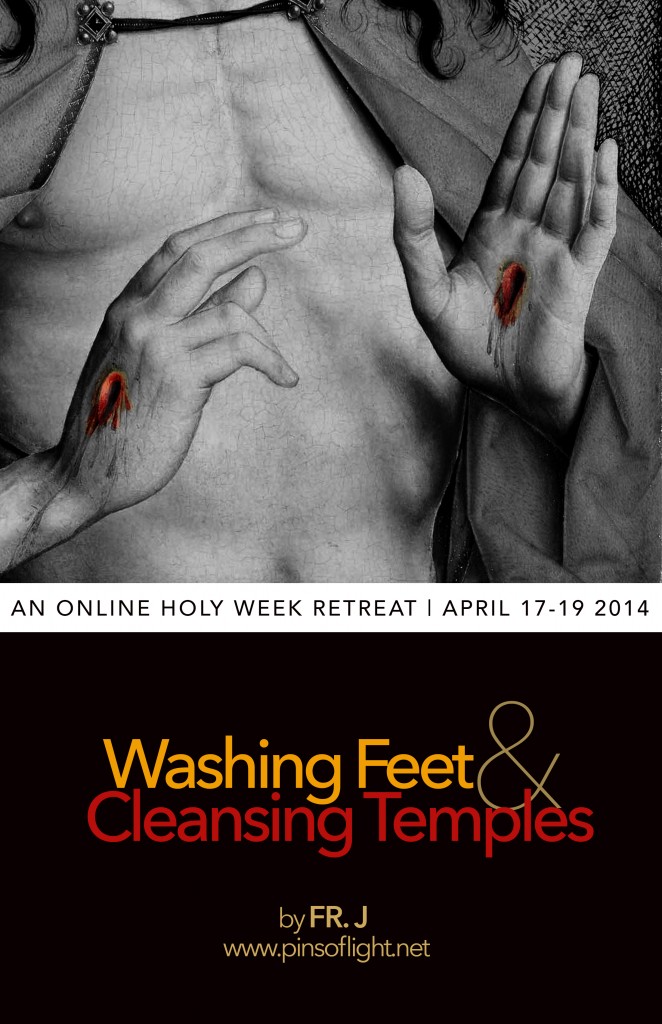
I came across with pinsoflight.net, a website that provides online retreat for the Holy Week. Looking for an alternative way to reflect, I tried it for myself.


The Holy Thursday retreat started with a question, "What do I desire most from the Lord right here and right now?"

To list down my answer, I recalled what I have prayed for yesterday in each churches we visited during the Visita Iglesia:

1. I pray to be an effective and best HR. I pray that I will be able to touch and change lives through my work. I pray that I would be able to help through my position.

2. I pray to be successful in my career. I pray that I would be able to have the means to apply for the board exam. I pray that my application be approved. I pray to pass the board exam and be a licensed Psychometrician. Eventually, after that, I pray that I would be able to take and finish Masters degree, to finish my Certificate Program in Professional Education and to take various additional courses to upgrade my skills and competencies as an HR practitioner and as a teacher in the future. I pray that I would be able to have the means to enroll and finish all of these.

3. I pray for the company I worked with, I pray for its success and for all those who are part of it. I pray that everyone will work as one in planning and implementing our mission and vision. I pray for camaraderie, for understanding, for trust, for competency, for strength, for wisdom and for all the grace that we need to keep going.

4. I pray for financial blessings, for financial stability and growth. I pray that I will be able to provide what was needed by my family - own house, own vehicle, complete appliances, furniture and fixtures, security and investments for the future. I pray that our source of income will keep flowing so that we could also have the means to be a blessing to others.

5. I pray for good health for myself, for my mom and for the rest of my family and friends. I pray that God's mantle of protection be with us always wherever we go.

6. I pray that I'll be able to serve God again through the talent(s) that He gave me. I pray that my heart will never get tired of serving Him and to serve others. I pray that I'll be a channel of blessings to others.

7. I pray for the one God has prepared for me. I pray that when I meet him, he'll finally be THE ONE. The person who will be the right guy for me, the person whom I will share my life with, the person who will accept me for what I am, the person who will love me truly, and vice versa. I pray that when our paths crossed, I will know in my heart that he is finally the one, and everything will fall at the right place, at the right, at the right moment and for the right reason.

This was followed by a Scripture Reading from the book of John 9:1-12 in which Jesus healed a blind man. Again, I was asked this question: "What kind of healing do you need in your life? And are you willing to do your part to achieve this healing?" Just like the blind man, I was sent to the Pool of Siloam to do my part of healing. There I washed my HEART out of physical and spiritual laziness (sloth) and my MIND out of excessive desire for money, food, fame, power or sex (lust).

I was guided to another Scripture Reading from the book of John 13:1-15, Gospel account 
of the “Washing of the Feet” during the Last Supper. I remember one of the songs I used to sing as a choir, this was entitled Pagkakaibigan sung by Hangad. 


Pagkakaibigan by Hangad

Ang sino man sa Aki'y mananahan
Mananahan din Ako sa kanya.
At kung siya'y mamunga nang masagana,
Siya sa Ama'y nagbigay ng karangalan.

Mula ngayon kayo'y Aking kaibigan
Hinango sa dilim at kababaan.
Ang kaibiga'y mag-aalay ng sarili niyang buhay;
Walang hihigit sa yaring pag-aalay.

Kung paanong mahal Ako ng Aking Ama,
Sa inyo'y Aking ipinadarama.
Sa pag-ibig Ko, kayo sana ay manahan,
At bilin Ko sa inyo ay magmahalan.

Pinili ka't hinirang upang mahalin
Nang mamunga't bunga mo'y panatilihin.
Humayo ka't mamunga nang masagana,
Kagalakang walang hanggang ipamamana

The act of washing of the feet teaches us the value of humility and shows us how to embrace someone else’s humanity, accept our differences, and forgive another person’s flaws. As I close my eyes, I recalled those persons who hurted me the most and caused me so much pain. Jesus invited me to wash their feet.


Saturday, April 5, 2014

I Failed Him

Yes, I failed Him. For the nth time, I broke my promise. For the nth time, I hurt Him again. Again and again, with my sins, with my weakness, with my disobedience and lack of faith.

How can I face Him again. After redeeming me from my past failures, here I am again, back in my old self. The old me that I disown, the old me that I detest, the old me that I regret. I thought she's already dead; how come she's alive now, ruling my heart and mind. 

I cried, I ran, I hide, far away from Him. I am so ashamed of myself. I was forgiven, but now how come I am sinning again?

Where is my faith? Where is my trust? He once told me, "Neither do I condemn thee: go, and sin no more." But why? Why did I give in? I thought I am strong enough to follow Him? But with just a snap of a finger everything that I had started has just been blown away. 

I hate myself for being so weak. I was freed, but now I'm imprisoning myself again from an endless pit. 

Will He still forgive me? Will He still give me another chance? Will he punish me? Will he take away my happiness or worst never give it at all; in exchange of my stubbornness, in payment of my sins?

I'm afraid to be alone and lonely again. Because sin is moving me far away from Him.

Down in the cold darkness, I knelt and pray, "Lord have mercy upon me, I have failed you a lot of times before, and now, I am failing you again. I am not worthy to be called your child anymore."

Then, in that seemingly endless silence, I heard Him say: My child, I loved you at your darkest. And I will always love you, no matter what. 


Saturday, July 20, 2013

Si Hesus, Maria, ang Rosaryo at Ako

Maaring para sa iba ang rosaryo ay isang paulit-ulit na dasal na walang kahulugan. Ngunit para sa akin, ang pagdarasal ng rosaryo ay isang ugnayan at pagbabahagi ng buhay ni Hesus kasama ni Maria.

Naging kagawian ko na ang magrosaryo sa sasakyan pag papasok na ko sa trabaho. Maski nung nag-aaral pa lang ako, dahil halos 2 oras ang byahe ko papuntang kolehiyo, dun ako nagkakaroon ng pagkakataon na makapagrosaryo . Dumating din ako sa puntong kinatamaran ko na ding magdasal nito, hanggang sa kaninang umaga, naramdaman ko ang kagustuhan ulit na magnilay sa pamamagitan ng mga misteryo nito. 

Dahil Sabado, ang pagninilayan ko ay ang Misteryo sa Tuwa. Sa gitna ng aking pagdarasal ay may bigla akong napagtanto: sa sandaling ito, ibinabahagi nila sa akin ang mga pangyayari na nagbigay sa kanila ng lubos na kagalakan. Parang silang nagkukwento ng masasayang kaganapan ng kanilang buhay. Naalala ko kung panong ganun din ako sa kanila sa mga pagkakataong sobrang tuwa-tuwa ako sa mga pagkakataong may magandang nangyari sa buhay ko. 

Tulad ng tao ang buhay nila ay binuo din Tuwa, Hapis, Liwanag at Luwalhati. Sa pagiging tao ng Diyos, namuhay Sya na katulad natin: tumatawa, nasasaktan, nagagalit, nakikipag-kaibigan,  itinatwa, hinangaan, inalipusta. Sa pamamagitan ng pagninilay-nilay natin ng mga misteryo ng Santo Rosaryo, nakikibahagi tayo sa kanilang naging buhay patungo sa kaluwalhatian. Ito ang nagiging tagapag-paalala na ang Diyos ay kaisa din natin sa bawat yugto ng ating buhay.

Thursday, March 28, 2013

The Other Wise Man by Henry van Dyke


I

In the days when Augustus Caesar was master of many kings and Herod reigned in Jerusalem, there lived in the city of Ecbatana, among the mountains of Persia, a certain man named Artaban. His house stood close to the outermost of the walls which encircled the royal treasury. From his roof he could look over the seven-fold battlements of black and white and crimson and blue and red and silver and gold, to the hill where the summer palace of the Parthian emperors glittered like a jewel in a crown.

Around the dwelling of Artaban spread a fair garden, a tangle of flowers and fruit-trees, watered by a score of streams descending from the slopes of Mount Orontes, and made musical by innumerable birds. But all colour was lost in the soft and odorous darkness of the late September night, and all sounds were hushed in the deep charm of its silence, save the plashing of the water, like a voice half-sobbing and half-laughing under the shadows. High above the trees a dim glow of light shone through the curtained arches of the upper chamber, where the master of the house was holding council with his friends.

He stood by the doorway to greet his guests--a tall, dark man of about forty years, with brilliant eyes set near together under his broad brow, and firm lines graven around his fine, thin lips; the brow of a dreamer and the mouth of a soldier, a man of sensitive feeling but inflexible will--one of those who, in whatever age they may live, are born for inward conflict and a life of quest.

His robe was of pure white wool, thrown over a tunic of silk; and a white, pointed cap, with long lapels at the sides, rested on his flowing black hair. It was the dress of the ancient priesthood of the Magi, called the fire-worshippers.

"Welcome!" he said, in his low, pleasant voice, as one after another entered the room--"welcome, Abdus; peace be with you, Rhodaspes and Tigranes, and with you my father, Abgarus. You are all welcome. This house grows bright with the joy of your presence."

There were nine of the men, differing widely in age, but alike in the richness of their dress of many-coloured silks, and in the massive golden collars around their necks, marking them as Parthian nobles, and in the winged circles of gold resting upon their breasts, the sign of the followers of Zoroaster.

They took their places around a small black altar at the end of the room, where a tiny flame was burning. Artaban, standing beside it, and waving a barsom of thin tamarisk branches above the fire, fed it with dry sticks of pine and fragrant oils. Then he began the ancient chant of the Yasna, and the voices of his companions joined in the hymn to Ahura-Mazda:

  We worship the Spirit Divine,
         all wisdom and goodness possessing,
  Surrounded by Holy Immortals,
         the givers of bounty and blessing;
  We joy in the work of His hands,
         His truth and His power confessing.

  We praise all the things that are pure,
         for these are His only Creation
  The thoughts that are true, and the words
         and the deeds that have won approbation;
  These are supported by Him,
         and for these we make adoration.
  Hear us, O Mazda!  Thou livest
         in truth and in heavenly gladness;
  Cleanse us from falsehood, and keep us
         from evil and bondage to badness,
  Pour out the light and the joy of Thy life
             on our darkness and sadness.

  Shine on our gardens and fields,
         shine on our working and waving;
  Shine on the whole race of man,
             believing and  unbelieving;
  Shine on us now through the night,
  Shine on us now in Thy might,
  The flame of our holy love
      and the song of our worship receiving.

The fire rose with the chant, throbbing as if the flame responded to the music, until it cast a bright illumination through the whole apartment, revealing its simplicity and splendour.

The floor was laid with tiles of dark blue veined with white; pilasters of twisted silver stood out against the blue walls; the clear-story of round-arched windows above them was hung with azure silk; the vaulted ceiling was a pavement of blue stones, like the body of heaven in its clearness, sown with silver stars. From the four corners of the roof hung four golden magic-wheels, called the tongues of the gods. At the eastern end, behind the altar, there were two dark-red pillars of porphyry; above them a lintel of the same stone, on which was carved the figure of a winged archer, with his arrow set to the string and his bow drawn.

The doorway between the pillars, which opened upon the terrace of the roof, was covered with a heavy curtain of the colour of a ripe pomegranate, embroidered with innumerable golden rays shooting upward from the floor. In effect the room was like a quiet, starry night, all azure and silver, flushed in the cast with rosy promise of the dawn. It was, as the house of a man should be, an expression of the character and spirit of the master.

He turned to his friends when the song was ended, and invited them to be seated on the divan at the western end of the room.

"You have come tonight," said he, looking around the circle, "at my call, as the faithful scholars of Zoroaster, to renew your worship and rekindle your faith in the God of Purity, even as this fire has been rekindled on the altar. We worship not the fire, but Him of whom it is the chosen symbol, because it is the purest of all created things. It speaks to us of one who is Light and Truth. Is it not so, my father?"

"It is well said, my son," answered the venerable Abgarus. "The enlightened are never idolaters. They lift the veil of form and go in to the shrine of reality, and new light and truth are coming to them continually through the old symbols." "Hear me, then, my father and my friends," said Artaban, "while I tell you of the new light and truth that have come to me through the most ancient of all signs. We have searched the secrets of Nature together, and studied the healing virtues of water and fire and the plants. We have read also the books of prophecy in which the future is dimly foretold in words that are hard to understand. But the highest of all learning is the knowledge of the stars. To trace their course is to untangle the threads of the mystery of life from the beginning to the end. If we could follow them perfectly, nothing would be hidden from us. But is not our knowledge of them still incomplete? Are there not many stars still beyond our horizon--lights that are known only to the dwellers in the far south-land, among the spice-trees of Punt and the gold mines of Ophir?"

There was a murmur of assent among the listeners.

"The stars," said Tigranes, "are the thoughts of the Eternal. They are numberless. But the thoughts of man can be counted, like the years of his life. The wisdom of the Magi is the greatest of all wisdoms on earth, because it knows its own ignorance. And that is the secret of power. We keep men always looking and waiting for a new sunrise. But we ourselves understand that the darkness is equal to the light, and that the conflict between them will never be ended."

"That does not satisfy me," answered Artaban, "for, if the waiting must be endless, if there could be no fulfilment of it, then it would not be wisdom to look and wait. We should become like those new teachers of the Greeks, who say that there is no truth, and that the only wise men are those who spend their lives in discovering and exposing the lies that have been believed in the world. But the new sunrise will certainly appear in the appointed time. Do not our own books tell us that this will come to pass, and that men will see the brightness of a great light?"

"That is true," said the voice of Abgarus; "every faithful disciple of Zoroaster knows the prophecy of the Avesta, and carries the word in his heart. `In that day Sosiosh the Victorious shall arise out of the number of the prophets in the east country. Around him shall shine a mighty brightness, and he shall make life everlasting, incorruptible, and immortal, and the dead shall rise again.'"

"This is a dark saying," said Tigranes, "and it may be that we shall never understand it. It is better to consider the things that are near at hand, and to increase the influence of the Magi in their own country, rather than to look for one who may be a stranger, and to whom we must resign our power."

The others seemed to approve these words. There was a silent feeling of agreement manifest among them; their looks responded with that indefinable expression which always follows when a speaker has uttered the thought that has been slumbering in the hearts of his listeners. But Artaban turned to Abgarus with a glow on his face, and said:
"My father, I have kept this prophecy in the secret place of my soul. Religion without a great hope would be like an altar without a living fire. And now the flame has burned more brightly, and by the light of it I have read other words which also have come from the fountain of Truth, and speak yet more clearly of the rising of the Victorious One in his brightness."

He drew from the breast of his tunic two small rolls of fine parchment, with writing upon them, and unfolded them carefully upon his knee.

"In the years that are lost in the past, long before our fathers came into the land of Babylon, there were wise men in Chaldea, from whom the first of the Magi learned the secret of the heavens. And of these Balaam the son of Beor was one of the mightiest. Hear the words of his prophecy: 'There shall come a star out of Jacob, and a sceptre shall arise out of Israel.'"

The lips of Tigranes drew downward with contempt, as he said:
"Judah was a captive by the waters of Babylon, and the sons of Jacob were in bondage to our kings. The tribes of Israel are scattered through the mountains like lost sheep, and from the remnant that dwells in Judea under the yoke of Rome neither star nor sceptre shall arise."

"And yet," answered Artaban, "it was the Hebrew Daniel, the mighty searcher of dreams, the counsellor of kings, the wise Belteshazzar, who was most honoured and beloved of our great King Cyrus. A prophet of sure things and a reader of the thoughts of the Eternal, Daniel proved himself to our people. And these are the words that he wrote." (Artaban read from the second roll:) " 'Know, therefore, and understand that from the going forth of the commandment to restore Jerusalem, unto the Anointed One, the Prince, the time shall be seven and threescore and two weeks."'

"But, my son," said Abgarus, doubtfully, "these are mystical numbers. Who can interpret them, or who can find the key that shall unlock their meaning?"

Artaban answered: "It has been shown to me and to my three companions among the Magi--Caspar, Melchior, and Balthazar. We have searched the ancient tablets of Chaldea and computed the time. It falls in this year. We have studied the sky, and in the spring of the year we saw two of the greatest planets draw near together in the sign of the Fish, which is the house of the Hebrews. We also saw a new star there, which shone for one night and then vanished. Now again the two great planets are meeting. This night is their conjunction. My three brothers are watching by the ancient Temple of the Seven Spheres, at Borsippa, in Babylonia, and I am watching here. If the star shines again, they will wait ten days for me at the temple, and then we will set out together for Jerusalem, to see and worship the promised one who shall be born King of Israel. I believe the sign will come. I have made ready for the journey. I have sold my possessions, and bought these three jewels--a sapphire, a ruby, and a pearl--to carry them as tribute to the King. And I ask you to go with me on the pilgrimage, that we may have joy together in finding the Prince who is worthy to be served."

While he was speaking he thrust his hand into the inmost fold of his, girdle and drew out three great gems--one blue as a fragment of the night sky, one redder than a ray of sunrise, and one as pure as the peak of a snow-mountain at twilight--and laid them on the outspread scrolls before him.

But his friends looked on with strange and alien eyes. A veil of doubt and mistrust came over their faces, like a fog creeping up from the marshes to hide the hills. They glanced at each other with looks of wonder and pity, as those who have listened to incredible sayings, the story of a wild vision, or the proposal of an impossible enterprise.

At last Tigranes said: "Artaban, this is a vain dream. It comes from too much looking upon the stars and the cherishing of lofty thoughts. It would be wiser to spend the time in gathering money for the new fire-temple at Chala. No king will ever rise from the broken race of Israel, and no end will ever come to the eternal strife of light and darkness. He who looks for it is a chaser of shadows. Farewell."

And another said: "Artaban, I have no knowledge of these things, and my office as guardian of the royal treasure binds me here. The quest is not for me. But if thou must follow it, fare thee well."

And another said: "In my house there sleeps a new bride, and I cannot leave her nor take her with me on this strange journey. This quest is not for me. But may thy steps be prospered wherever thou goest. So, farewell."

And another said: "I am ill and unfit for hardship, but there is a man among my servants whom I will send with thee when thou goest, to bring me word how thou farest."

So, one by one, they left the house of Artaban. But Abgarus, the oldest and the one who loved him the best, lingered after the others had gone, and said, gravely: "My son, it may be that the light of truth is in this sign that has appeared in the skies, and then it will surely lead to the Prince and the mighty brightness. Or it may be that it is only a shadow of the light, as Tigranes has said, and then he who follows it will have a long pilgrimage and a fruitless search. But it is better to follow even the shadow of the best than to remain content with the worst. And those who would see wonderful things must often be ready to travel alone. I am too old for this journey, but my heart shall be a companion of thy pilgrimage day and night, and I shall know the end of thy quest. Go in peace."

Then Abgarus went out of the azure chamber with its silver stars, and Artaban was left in solitude.

He gathered up the jewels and replaced them in his girdle. For a long time he stood and watched the flame that flickered and sank upon the altar. Then he crossed the hall, lifted the heavy curtain, and passed out between the pillars of porphyry to the terrace on the roof.

The shiver that runs through the earth ere she rouses from her night-sleep had already begun, and the cool wind that heralds the daybreak was drawing downward from the lofty snow-traced ravines of Mount Orontes. Birds, half-awakened, crept and chirped among the rustling leaves, and the smell of ripened grapes came in brief wafts from the arbours.

Far over the eastern plain a white mist stretched like a lake. But where the distant peaks of Zagros serrated the western horizon the sky was clear. Jupiter and Saturn rolled together like drops of lambent flame about to blend in one.

As Artaban watched them, a steel-blue spark was born out of the darkness beneath, rounding itself with purple splendours to a crimson sphere, and spiring upward through rays of saffron and orange into a point of white radiance. Tiny and infinitely remote, yet perfect in every part, it pulsated in the enormous vault as if the three jewels in the Magian's girdle had mingled and been transformed into a living heart of light.

He bowed his head. He covered his brow with his hands.

"It is the sign," he said. "The King is coming, and I will go to meet him."


All night long, Vasda, the swiftest of Artaban's horses, had been waiting, saddled and bridled, in her stall, pawing the ground impatiently, and shaking her bit as if she shared the eagerness of her master's purpose, though she knew not its meaning.
Before the birds had fully roused to their strong, high, joyful chant of morning song, before the white mist had begun to lift lazily from the plain, the Other Wise Man was in the saddle, riding swiftly along the high-road, which skirted the base of Mount Orontes, westward.

How close, how intimate is the comradeship between a man and his favourite horse on a long journey. It is a silent, comprehensive friendship, an intercourse beyond the need of words.

They drink at the same way-side springs, and sleep under the same guardian stars. They are conscious together of the subduing spell of nightfall and the quickening joy of daybreak. The master shares his evening meal with his hungry companion, and feels the soft, moist lips caressing the palm of his hand as they close over the morsel of bread. In the gray dawn he is roused from his bivouac by the gentle stir of a warm, sweet breath over his sleeping face, and looks up into the eyes of his faithful fellow-traveller, ready and waiting for the toil of the day. Surely, unless he is a pagan and an unbeliever, by whatever name he calls upon his God, he will thank Him for this voiceless sympathy, this dumb affection, and his morning prayer will embrace a double blessing--God bless us both, the horse and the rider, and keep our feet from falling and our souls from death!

Then, through the keen morning air, the swift hoofs beat their tattoo along the road, keeping time to the pulsing of two hearts that are moved with the same eager desire--to conquer space, to devour the distance, to attain the goal of the journey.
Artaban must indeed ride wisely and well if he would keep the appointed hour with the other Magi; for the route was a hundred and fifty parasangs, and fifteen was the utmost that he could travel in a day. But he knew Vasda's strength, and pushed forward without anxiety, making the fixed distance every day, though he must travel late into the night, and in the morning long before sunrise.

He passed along the brown slopes of Mount Orontes, furrowed by the rocky courses of a hundred torrents.

He crossed the level plains of the Nisaeans, where the famous herds of horses, feeding in the wide pastures, tossed their heads at Vasda's approach, and galloped away with a thunder of many hoofs, and flocks of wild birds rose suddenly from the swampy meadows, wheeling in great circles with a shining flutter of innumerable wings and shrill cries of surprise.

He traversed the fertile fields of Concabar, where the dust from the threshing-floors filled the air with a golden mist, half hiding the huge temple of Astarte with its four hundred pillars.

At Baghistan, among the rich gardens watered by fountains from the rock, he looked up at the mountain thrusting its immense rugged brow out over the road, and saw the figure of King Darius trampling upon his fallen foes, and the proud list of his wars and conquests graven high upon the face of the eternal cliff.

Over many a cold and desolate pass, crawling painfully across the wind-swept shoulders of the hills; down many a black mountain-gorge, where the river roared and raced before him like a savage guide; across many a smiling vale, with terraces of yellow limestone full of vines and fruit-trees; through the oak-groves of Carine and the dark Gates of Zagros, walled in by precipices; into the ancient city of Chala, where the people of Samaria had been kept in captivity long ago; and out again by the mighty portal, riven through the encircling hills, where he saw the image of the High Priest of the Magi sculptured on the wall of rock, with hand uplifted as if to bless the centuries of pilgrims; past the entrance of the narrow defile, filled from end to end with orchards of peaches and figs, through which the river Gyndes foamed down to meet him; over the broad rice-fields, where the autumnal vapours spread their deathly mists; following along the course of the river, under tremulous shadows of poplar and tamarind, among the lower hills; and out upon the flat plain, where the road ran straight as an arrow through the stubble-fields and parched meadows; past the city of Ctesiphon, where the Parthian emperors reigned, and the vast metropolis of Seleucia which Alexander built; across the swirling floods of Tigris and the many channels of Euphrates, flowing yellow through the corn-lands--Artaban pressed onward until he arrived, at nightfall on the tenth day, beneath the shattered walls of populous Babylon.

Vasda was almost spent, and Artaban would gladly have turned into the city to find rest and refreshment for himself and for her. But he knew that it was three hours' journey yet to the Temple of the Seven Spheres, and he must reach the place by midnight if he would find his comrades waiting. So he did not halt, but rode steadily across the stubble-fields.

A grove of date-palms made an island of gloom in the pale yellow sea. As she passed into the shadow Vasda slackened her pace, and began to pick her way more carefully.
Near the farther end of the darkness an access of caution seemed to fall upon her. She scented some danger or difficulty; it was not in her heart to fly from it--only to be prepared for it, and to meet it wisely, as a good horse should do. The grove was close and silent as the tomb; not a leaf rustled, not a bird sang.

She felt her steps before her delicately, carrying her head low, and sighing now and then with apprehension. At last she gave a quick breath of anxiety and dismay, and stood stock-still, quivering in every muscle, before a dark object in the shadow of the last palm-tree.

Artaban dismounted. The dim starlight revealed the form of a man lying across the road. His humble dress and the outline of his haggard face showed that he was probably one of the Hebrews who still dwelt in great numbers around the city. His pallid skin, dry and yellow as parchment, bore the mark of the deadly fever which ravaged the marsh-lands in autumn. The chill of death was in his lean hand, and, as Artaban released it, the arm fell back inertly upon the motionless breast.

He turned away with a thought of pity, leaving the body to that strange burial which the Magians deemed most fitting--the funeral of the desert, from which the kites and vultures rise on dark wings, and the beasts of prey slink furtively away. When they are gone there is only a heap of white bones on the sand.

But, as he turned, a long, faint, ghostly sigh came from the man's lips. The bony fingers gripped the hem of the Magian's robe and held him fast.

Artaban's heart leaped to his throat, not with fear, but with a dumb resentment at the importunity of this blind delay.

How could he stay here in the darkness to minister to a dying stranger? What claim had this unknown fragment of human life upon his compassion or his service? If he lingered but for an hour he could hardly reach Borsippa at the appointed time. His companions would think he had given up the journey. They would go without him. He would lose his quest.

But if he went on now, the man would surely die. If Artaban stayed, life might be restored. His spirit throbbed and fluttered with the urgency of the crisis. Should he risk the great reward of his faith for the sake of a single deed of charity? Should he turn aside, if only for a moment, from the following of the star, to give a cup of cold water to a poor, perishing Hebrew?

"God of truth and purity," he prayed, "direct me in the holy path, the way of wisdom which Thou only knowest."

Then he turned back to the sick man. Loosening the grasp of his hand, he carried him to a little mound at the foot of the palm-tree.

He unbound the thick folds of the turban and opened the garment above the sunken breast. He brought water from one of the small canals near by, and moistened the sufferer's brow and mouth. He mingled a draught of one of those simple but potent remedies which he carried always in his girdle--for the Magians were physicians as well as astrologers--and poured it slowly between the colourless lips. Hour after hour he laboured as only a skilful healer of disease can do. At last the man's strength returned; he sat up and looked about him.

"Who art thou?" he said, in the rude dialect of the country, "and why hast thou sought me here to bring back my life?"

"I am Artaban the Magian, of the city of Ecbatana, and I am going to Jerusalem in search of one who is to be born King of the Jews, a great Prince and Deliverer of all men. I dare not delay any longer upon my journey, for the caravan that has waited for me may depart without me. But see, here is all that I have left of bread and wine, and here is a potion of healing herbs. When thy strength is restored thou canst find the dwellings of the Hebrews among the houses of Babylon."
The Jew raised his trembling hand solemnly to heaven.

"Now may the God of Abraham and Isaac and Jacob bless and prosper the journey of the merciful, and bring him in peace to his desired haven. Stay! I have nothing to give thee in return--only this: that I can tell thee where the Messiah must be sought. For our prophets have said that he should be born not in Jerusalem, but in Bethlehem of Judah. May the Lord bring thee in safety to that place, because thou hast had pity upon the sick."

It was already long past midnight. Artaban rode in haste, and Vasda, restored by the brief rest, ran eagerly through the silent plain and swam the channels of the river. She put forth the remnant of her strength, and fled over the ground like a gazelle.
But the first beam of the rising sun sent a long shadow before her as she entered upon the final stadium of the journey, and the eyes of Artaban, anxiously scanning the great mound of Nimrod and the Temple of the Seven Spheres, could discern no trace of his friends.

The many-coloured terraces of black and orange and red and yellow and green and blue and white, shattered by the convulsions of nature, and crumbling under the repeated blows of human violence, still glittered like a ruined rainbow in the morning light.

Artaban rode swiftly around the hill. He dismounted and climbed to the highest terrace, looking out toward the west.

The huge desolation of the marshes stretched away to the horizon and the border of the desert. Bitterns stood by the stagnant pools and jackals skulked through the low bushes; but there was no sign of the caravan of the Wise Men, far or near.
At the edge of the terrace he saw a little cairn of broken bricks, and under them a piece of papyrus. He caught it up and read: "We have waited past the midnight, and can delay no longer. We go to find the King. Follow us across the desert."
Artaban sat down upon the ground and covered his head in despair.

"How can I cross the desert," said he, "with no food and with a spent horse? I must return to Babylon, sell my sapphire, and buy a train of camels, and provision for the journey. I may never overtake my friends. Only God the merciful knows whether I shall not lose the sight of the King because I tarried to show mercy."


There was a silence in the Hall of Dreams, where I was listening to the story of the Other Wise Man. Through this silence I saw, but very dimly, his figure passing over the dreary undulations of the desert, high upon the back of his camel, rocking steadily onward like a ship over the waves.

The land of death spread its cruel net around him. The stony waste bore no fruit but briers and thorns. The dark ledges of rock thrust themselves above the surface here and there, like the bones of perished monsters. Arid and inhospitable mountain-ranges rose before him, furrowed with dry channels of ancient torrents, white and ghastly as scars on the face of nature. Shifting hills of treacherous sand were heaped like tombs along the horizon. By day, the fierce heat pressed its intolerable burden on the quivering air. No living creature moved on the dumb, swooning earth, but tiny jerboas scuttling through the parched bushes, or lizards vanishing in the clefts of the rock. By night the jackals prowled and barked in the distance, and the lion made the black ravines echo with his hollow roaring, while a bitter, blighting chill followed the fever of the day. Through heat and cold, the Magian moved steadily onward.

Then I saw the gardens and orchards of Damascus, watered by the streams of Abana and Pharpar, with their sloping swards inlaid with bloom, and their thickets of myrrh and roses. I saw the long, snowy ridge of Hermon, and the dark groves of cedars, and the valley of the Jordan, and the blue waters of the Lake of Galilee, and the fertile plain of Esdraelon, and the hills of Ephraim, and the highlands of Judah. Through all these I followed the figure of Artaban moving steadily onward, until he arrived at Bethlehem. And it was the third day after the three Wise Men had come to that place and had found Mary and Joseph, with the young child, Jesus, and had laid their gifts of gold and frankincense and myrrh at his feet.

Then the Other Wise Man drew near, weary, but full of hope, bearing his ruby and his pearl to offer to the King. "For now at last," he said, "I shall surely find him, though I be alone, and later than my brethren. This is the place of which the Hebrew exile told me that the prophets had spoken, and here I shall behold the rising of the great light. But I must inquire about the visit of my brethren, and to what house the star directed them, and to whom they presented their tribute."

The streets of the village seemed to be deserted, and Artaban wondered whether the men had all gone up to the hill-pastures to bring down their sheep. From the open door of a cottage he heard the sound of a woman's voice singing softly. He entered and found a young mother hushing her baby to rest. She told him of the strangers from the far East who had appeared in the village three days ago, and how they said that a star had guided them to the place where Joseph of Nazareth was lodging with his wife and her new-born child, and how they had paid reverence to the child and given him many rich gifts.

"But the travellers disappeared again," she continued, "as suddenly as they had come. We were afraid at the strangeness of their visit. We could not understand it. The man of Nazareth took the child and his mother, and fled away that same night secretly, and it was whispered that they were going to Egypt. Ever since, there has been a spell upon the village; something evil hangs over it. They say that the Roman soldiers are coming from Jerusalem to force a new tax from us, and the men have driven the flocks and herds far back among the hills, and hidden themselves to escape it."

Artaban listened to her gentle, timid speech, and the child in her arms looked up in his face and smiled, stretching out its rosy hands to grasp at the winged circle of gold on his breast. His heart warmed to the touch. It seemed like a greeting of love and trust to one who had journeyed long in loneliness and perplexity, fighting with his own doubts and fears, and following a light that was veiled in clouds.

"Why might not this child have been the promised Prince?" he asked within himself, as he touched its soft cheek. "Kings have been born ere now in lowlier houses than this, and the favourite of the stars may rise even from a cottage. But it has not seemed good to the God of wisdom to reward my search so soon and so easily. The one whom I seek has gone before me; and now I must follow the King to Egypt."
The young mother laid the baby in its cradle, and rose to minister to the wants of the strange guest that fate had brought into her house. She set food before him, the plain fare of peasants, but willingly offered, and therefore full of refreshment for the soul as well as for the body. Artaban accepted it gratefully; and, as he ate, the child fell into a happy slumber, and murmured sweetly in its dreams, and a great peace filled the room.

But suddenly there came the noise of a wild confusion in the streets of the village, a shrieking and wailing of women's voices, a clangour of brazen trumpets and a clashing of swords, and a desperate cry: "The soldiers! the soldiers of Herod! They are killing our children."

The young mother's face grew white with terror. She clasped her child to her bosom, and crouched motionless in the darkest corner of the room, covering him with the folds of her robe, lest he should wake and cry.

But Artaban went quickly and stood in the doorway of the house. His broad shoulders filled the portal from side to side, and the peak of his white cap all but touched the lintel.

The soldiers came hurrying down the street with bloody hands and dripping swords. At the sight of the stranger in his imposing dress they hesitated with surprise. The captain of the band approached the threshold to thrust him aside. But Artaban did not stir. His face was as calm as though he were watching the stars, and in his eyes there burned that steady radiance before which even the half-tamed hunting leopard shrinks, and the bloodhound pauses in his leap. He held the soldier silently for an instant, and then said in a low voice:

"I am all alone in this place, and I am waiting to give this jewel to the prudent captain who will leave me in peace."

He showed the ruby, glistening in the hollow of his hand like a great drop of blood.
The captain was amazed at the splendour of the gem. The pupils of his eyes expanded with desire, and the hard lines of greed wrinkled around his lips. He stretched out his hand and took the ruby.

"March on!" he cried to his men, "there is no child here. The house is empty."
The clamor and the clang of arms passed down the street as the headlong fury of the chase sweeps by the secret covert where the trembling deer is hidden. Artaban re-entered the cottage. He turned his face to the east and prayed:

"God of truth, forgive my sin! I have said the thing that is not, to save the life of a child. And two of my gifts are gone. I have spent for man that which was meant for God. Shall I ever be worthy to see the face of the King?"
But the voice of the woman, weeping for joy in the shadow behind him, said very gently:

"Because thou hast saved the life of my little one, may the Lord bless thee and keep thee; the Lord make His face to shine upon thee and be gracious unto thee; the Lord lift up His countenance upon thee and give thee peace."


Again there was a silence in the Hall of Dreams, deeper and more mysterious than the first interval, and I understood that the years of Artaban were flowing very swiftly under the stillness, and I caught only a glimpse, here and there, of the river of his life shining through the mist that concealed its course.

I saw him moving among the throngs of men in populous Egypt, seeking everywhere for traces of the household that had come down from Bethlehem, and finding them under the spreading sycamore-trees of Heliopolis, and beneath the walls of the Roman fortress of New Babylon beside the Nile--traces so faint and dim that they vanished before him continually, as footprints on the wet river-sand glisten for a moment with moisture and then disappear.

I saw him again at the foot of the pyramids, which lifted their sharp points into the intense saffron glow of the sunset sky, changeless monuments of the perishable glory and the imperishable hope of man. He looked up into the face of the crouching Sphinx and vainly tried to read the meaning of the calm eyes and smiling mouth. Was it, indeed, the mockery of all effort and all aspiration, as Tigranes had said--the cruel jest of a riddle that has no answer, a search that never can succeed? Or was there a touch of pity and encouragement in that inscrutable smile--a promise that even the defeated should attain a victory, and the disappointed should discover a prize, and the ignorant should be made wise, and the blind should see, and the wandering should come into the haven at last?

I saw him again in an obscure house of Alexandria, taking counsel with a Hebrew rabbi. The venerable man, bending over the rolls of parchment on which the prophecies of Israel were written, read aloud the pathetic words which foretold the sufferings of the promised Messiah--the despised and rejected of men, the man of sorrows and acquainted with grief.

"And remember, my son," said he, fixing his eyes upon the face of Artaban, "the King whom thou seekest is not to be found in a palace, nor among the rich and powerful. If the light of the world and the glory of Israel had been appointed to come with the greatness of earthly splendour, it must have appeared long ago. For no son of Abraham will ever again rival the power which Joseph had in the palaces of Egypt, or the magnificence of Solomon throned between the lions in Jerusalem. But the light for which the world is waiting is a new light, the glory that shall rise out of patient and triumphant suffering. And the kingdom which is to be established forever is a new kingdom, the royalty of unconquerable love.

"I do not know how this shall come to pass, nor how the turbulent kings and peoples of earth shall be brought to acknowledge the Messiah and pay homage to him. But this I know. Those who seek him will do well to look among the poor and the lowly, the sorrowful and the oppressed."

So I saw the Other Wise Man again and again, travelling from place to place, and searching among the people of the dispersion, with whom the little family from Bethlehem might, perhaps, have found a refuge. He passed through countries where famine lay heavy upon the land, and the poor were crying for bread. He made his dwelling in plague-stricken cities where the sick were languishing in the bitter companionship of helpless misery. He visited the oppressed and the afflicted in the gloom of subterranean prisons, and the crowded wretchedness of slave-markets, and the weary toil of galley-ships. In all this populous and intricate world of anguish, though he found none to worship, he found many to help. He fed the hungry, and clothed the naked, and healed the sick, and comforted the captive; and his years passed more swiftly than the weaver's shuttle that flashes back and forth through the loom while the web grows and the pattern is completed.

It seemed almost as if he had forgotten his quest. But once I saw him for a moment as he stood alone at sunrise, waiting at the gate of a Roman prison. He had taken from a secret resting-place in his bosom the pearl, the last of his jewels. As he looked at it, a mellower lustre, a soft and iridescent light, full of shifting gleams of azure and rose, trembled upon its surface. It seemed to have absorbed some reflection of the lost sapphire and ruby. So the secret purpose of a noble life draws into itself the memories of past joy and past sorrow. All that has helped it, all that has hindered it, is transfused by a subtle magic into its very essence. It becomes more luminous and precious the longer it is carried close to the warmth of the beating heart.

Then, at last, while I was thinking of this pearl, and of its meaning, I heard the end of the story of the Other Wise Man.


V

Three-and-thirty years of the life of Artaban had passed away, and he was still a pilgrim and a seeker after light. His hair, once darker than the cliffs of Zagros, was now white as the wintry snow that covered them. His eyes, that once flashed like flames of fire, were dull as embers smouldering among the ashes.

Worn and weary and ready to die, but still looking for the King, he had come for the last time to Jerusalem. He had often visited the holy city before, and had searched all its lanes and crowded bevels and black prisons without finding any trace of the family of Nazarenes who had fled from Bethlehem long ago. But now it seemed as if he must make one more effort, and something whispered in his heart that, at last, he might succeed.

It was the season of the Passover. The city was thronged with strangers. The children of Israel, scattered in far lands, had returned to the Temple for the great feast, and there had been a confusion of tongues in the narrow streets for many days.

But on this day a singular agitation was visible in the multitude. The sky was veiled with a portentous gloom. Currents of excitement seemed to flash through the crowd. A secret tide was sweeping them all one way. The clatter of sandals and the soft, thick sound of thousands of bare feet shuffling over the stones, flowed unceasingly along the street that leads to the Damascus gate.

Artaban joined a group of people from his own country, Parthian Jews who had come up to keep the Passover, and inquired of them the cause of the tumult, and where they were going.

"We are going," they answered, "to the place called Golgotha, outside the city walls, where there is to be an execution. Have you not heard what has happened? Two famous robbers are to be crucified, and with them another, called Jesus of Nazareth, a man who has done many wonderful works among the people, so that they love him greatly. But the priests and elders have said that he must die, because he gave himself out to be the Son of God. And Pilate has sent him to the cross because he said that he was the `King of the Jews.'

How strangely these familiar words fell upon the tired heart of Artaban! They had led him for a lifetime over land and sea. And now they came to him mysteriously, like a message of despair. The King had arisen, but he had been denied and cast out. He was about to perish. Perhaps he was already dying. Could it be the same who had been born in Bethlehem thirty-three years ago, at whose birth the star had appeared in heaven, and of whose coming the prophets had spoken?

Artaban's heart beat unsteadily with that troubled, doubtful apprehension which is the excitement of old age. But he said within himself: "The ways of God are stranger than the thoughts of men, and it may be that I shall find the King, at last, in the hands of his enemies, and shall come in time to offer my pearl for his ransom before he dies."

So the old man followed the multitude with slow and painful steps toward the Damascus gate of the city. Just beyond the entrance of the guardhouse a troop of Macedonian soldiers came down the street, dragging a young girl with torn dress and dishevelled hair. As the Magian paused to look at her with compassion, she broke suddenly from the hands of her tormentors, and threw herself at his feet, clasping him around the knees. She had seen his white cap and the winged circle on his breast.

"Have pity on me," she cried, "and save me, for the sake of the God of Purity! I also am a daughter of the true religion which is taught by the Magi. My father was a merchant of Parthia, but he is dead, and I am seized for his debts to be sold as a slave. Save me from worse than death!"

Artaban trembled.

It was the old conflict in his soul, which had come to him in the palm-grove of Babylon and in the cottage at Bethlehem--the conflict between the expectation of faith and the impulse of love. Twice the gift which he had consecrated to the worship of religion had been drawn to the service of humanity. This was the third trial, the ultimate probation, the final and irrevocable choice.
Was it his great opportunity, or his last temptation? He could not tell. One thing only was clear in the darkness of his mind--it was inevitable. And does not the inevitable come from God?

One thing only was sure to his divided heart--to rescue this helpless girl would be a true deed of love. And is not love the light of the soul?

He took the pearl from his bosom. Never had it seemed so luminous, so radiant, so full of tender, living lustre. He laid it in the hand of the slave.

"This is thy ransom, daughter! It is the last of my treasures which I kept for the King."

While he spoke, the darkness of the sky deepened, and shuddering tremors ran through the earth heaving convulsively like the breast of one who struggles with mighty grief.

The walls of the houses rocked to and fro. Stones were loosened and crashed into the street. Dust clouds filled the air. The soldiers fled in terror, reeling like drunken men. But Artaban and the girl whom he had ransomed crouched helpless beneath the wall of the Praetorium.

What had he to fear? What had he to hope? He had given away the last remnant of his tribute for the King. He had parted with the last hope of finding him. The quest was over, and it had failed. But, even in that thought, accepted and embraced, there was peace. It was not resignation. It was not submission. It was something more profound and searching. He knew that all was well, because he had done the best that he could from day to day. He had been true to the light that had been given to him. He had looked for more. And if he had not found it, if a failure was all that came out of his life, doubtless that was the best that was possible. He had not seen the revelation of "life everlasting, incorruptible and immortal." But he knew that even if he could live his earthly life over again, it could not be otherwise than it had been.

One more lingering pulsation of the earthquake quivered through the ground. A heavy tile, shaken from the roof, fell and struck the old man on the temple. He lay breathless and pale, with his gray head resting on the young girl's shoulder, and the blood trickling from the wound. As she bent over him, fearing that he was dead, there came a voice through the twilight, very small and still, like music sounding from a distance, in which the notes are clear but the words are lost. The girl turned to see if some one had spoken from the window above them, but she saw no one.
Then the old man's lips began to move, as if in answer, and she heard him say in the Parthian tongue:

"Not so, my Lord! For when saw I thee an hungered and fed thee? Or thirsty, and gave thee drink? When saw I thee a stranger, and took thee in? Or naked, and clothed thee? When saw I thee sick or in prison, and came unto thee? Three-and-- thirty years have I looked for thee; but I have never seen thy face, nor ministered to thee, my King."

He ceased, and the sweet voice came again. And again the maid heard it, very faint and far away. But now it seemed as though she understood the words:
"Verily I say unto thee, Inasmuch as thou hast done it unto one of the least of these my brethren, thou hast done it unto me."

A calm radiance of wonder and joy lighted the pale face of Artaban like the first ray of dawn, on a snowy mountain-peak. A long breath of relief exhaled gently from his lips.

His journey was ended. His treasures were accepted. The Other Wise Man had found the King.